Gate 1: complete the design brief
Provide dimensions, target weight, feel, appearance references, age grade, markets and forecast order quantities. Identify essential design details and allowed changes. Incomplete requirements tend to reappear as tool modifications later, when they are more expensive and can delay subsequent approvals.
Gate 2: agree engineering and ownership
Review the proposed material, construction, parting lines, filling access and relevant molding constraints. Approve the drawing revision and tooling quotation. Put mold ownership, maintenance, storage, production authorization and exclusivity terms in writing before releasing the tool order.
Gate 3: evaluate trial samples
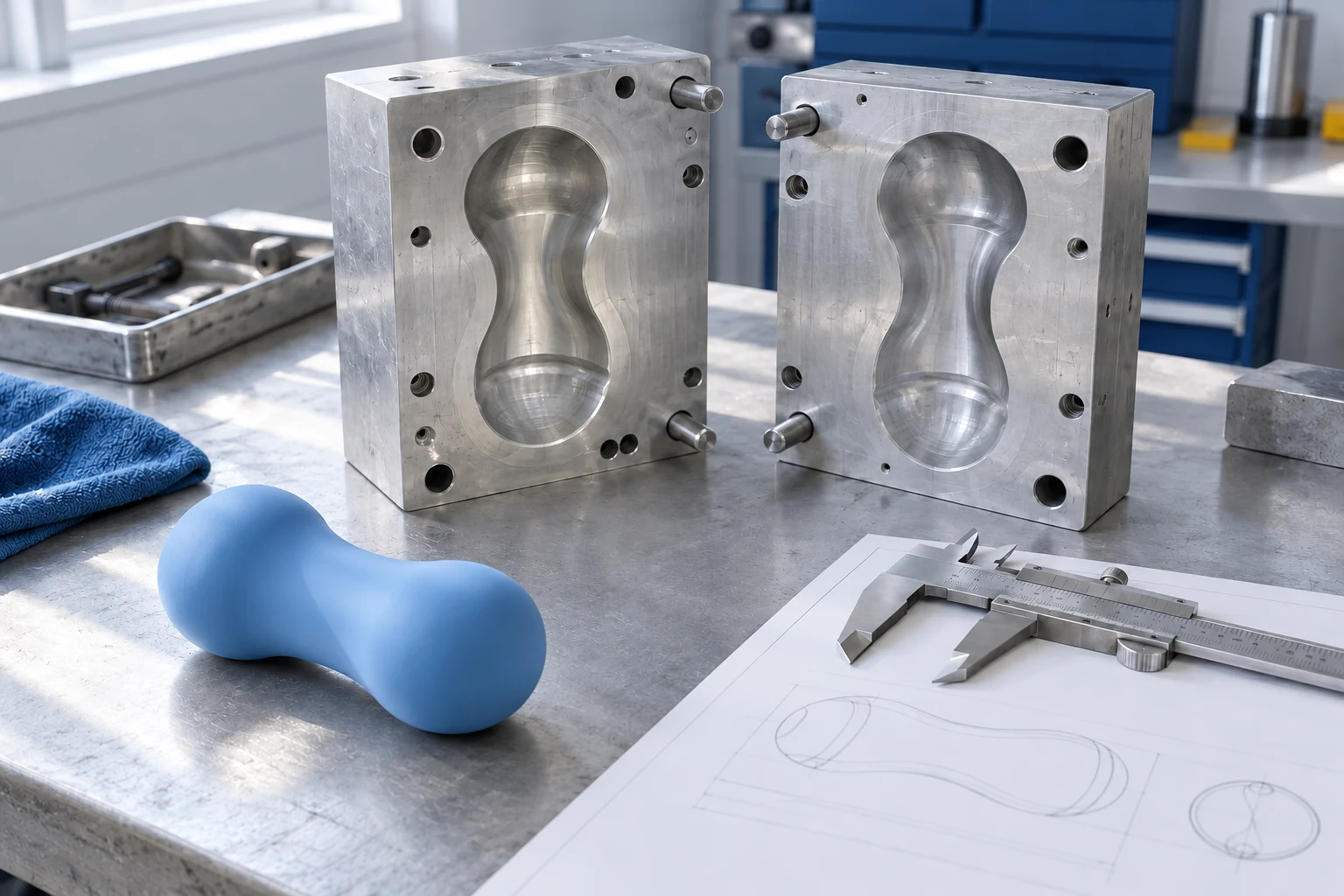
Tool trials reveal whether the proposed geometry and process produce the required part. Measure dimensions and unit weight, inspect surface finish and compare function or rebound with the target. Keep a consolidated change list, so each revision can be evaluated against a clear set of observations.
Gate 4: confirm compliance and presentation
Use the agreed configuration for laboratory samples and retail-pack approval. A new material or pigment after testing may create another review cycle. Allow time for laboratory scheduling, shipping samples, results review and any corrective work. Approve labels, warnings, instructions and barcodes together with the package.
Gate 5: release the pilot and bulk run
Use the pilot to check repeatability, assembly and packing. Approve the retained reference sample, inspection criteria and lot-traceability approach. Bulk production should start against the signed specification revision; any deviation needs documented approval.
Build contingency around unresolved decisions
Ask for a schedule with a responsible owner at each gate and separate estimates for engineering, tooling, trials, testing and production. Record which dates depend on buyer approval. For repeat orders, confirm tool condition, material availability and booked capacity before reusing the original schedule.
How the Chenghai cluster shortens the critical path
In Chenghai the activities that stretch development timelines elsewhere sit on our doorstep: mold steel and machining, trial machines, compound and pigment suppliers, printing and carton making. A tool correction that means dispatching the mold across regions elsewhere is handled locally in days, and trial samples can be run on nearby machines while the engineering team observes. Buyers still control every approval gate — the difference is that between gates, little idle time accumulates, which is why experienced customers bring time-sensitive promotional and seasonal molds here.
A schedule based on approval gates
| Stage | Ready when | Typical cause of delay |
|---|---|---|
| Brief and engineering | Dimensions, feel, market and drawing scope are agreed | Undefined geometry or conflicting requirements |
| Design freeze | Construction, tooling terms and drawing revision are approved | Late changes to the shape or parting line |
| Tool build and trials | Tool samples can be measured and evaluated | Tool corrections or a new material specification |
| Sample approval | Reference sample and test configuration are signed off | Unresolved finish, weight or functional criteria |
| Testing and packaging | Required results and final artwork are ready | A changed color, filling or label after testing |
| Pilot and bulk release | Pilot results, quality plan and line schedule align | Open corrective actions or missing approval |
Questions & answers
Frequently asked questions.
How long does it take to make a new squishy toy mold?
Tool build itself is typically measured in weeks, but the end-to-end timeline includes engineering, trials, sample revisions, testing and pilot run, and is largely driven by how quickly samples are approved. We supply a gate schedule before authorizing tooling.
Can we compress the schedule for a fixed launch date?
Bring the launch date and we build the schedule backward, identifying parallel tasks — packaging artwork while tools run, early laboratory scheduling — and the decisions that must be made by specific dates. Some gates, such as sample approval, cannot safely be skipped.
What happens if the first samples are wrong?
Trial results go onto a consolidated change list; engineering adjusts the tool or process and produces revised samples for re-evaluation. Revision responsibility and any charges are defined in the tooling terms before the project starts.
Should testing happen during or after mold development?
Laboratory samples use the agreed configuration and scheduling begins early, since testing sits on the critical path for most retail launches. A material change after testing can trigger another cycle, which the gate plan anticipates.
How is the mold maintained between orders?
Mold ID, drawing revision, maintenance records, repairs and authorized production runs stay with the tooling file; before each repeat order we confirm tool condition, material availability and booked line capacity.
Apply this to your program
Bring a specific model into the discussion.
Attach your destination, expected quantity and approval requirements to the SKU.
Discuss Your Requirements