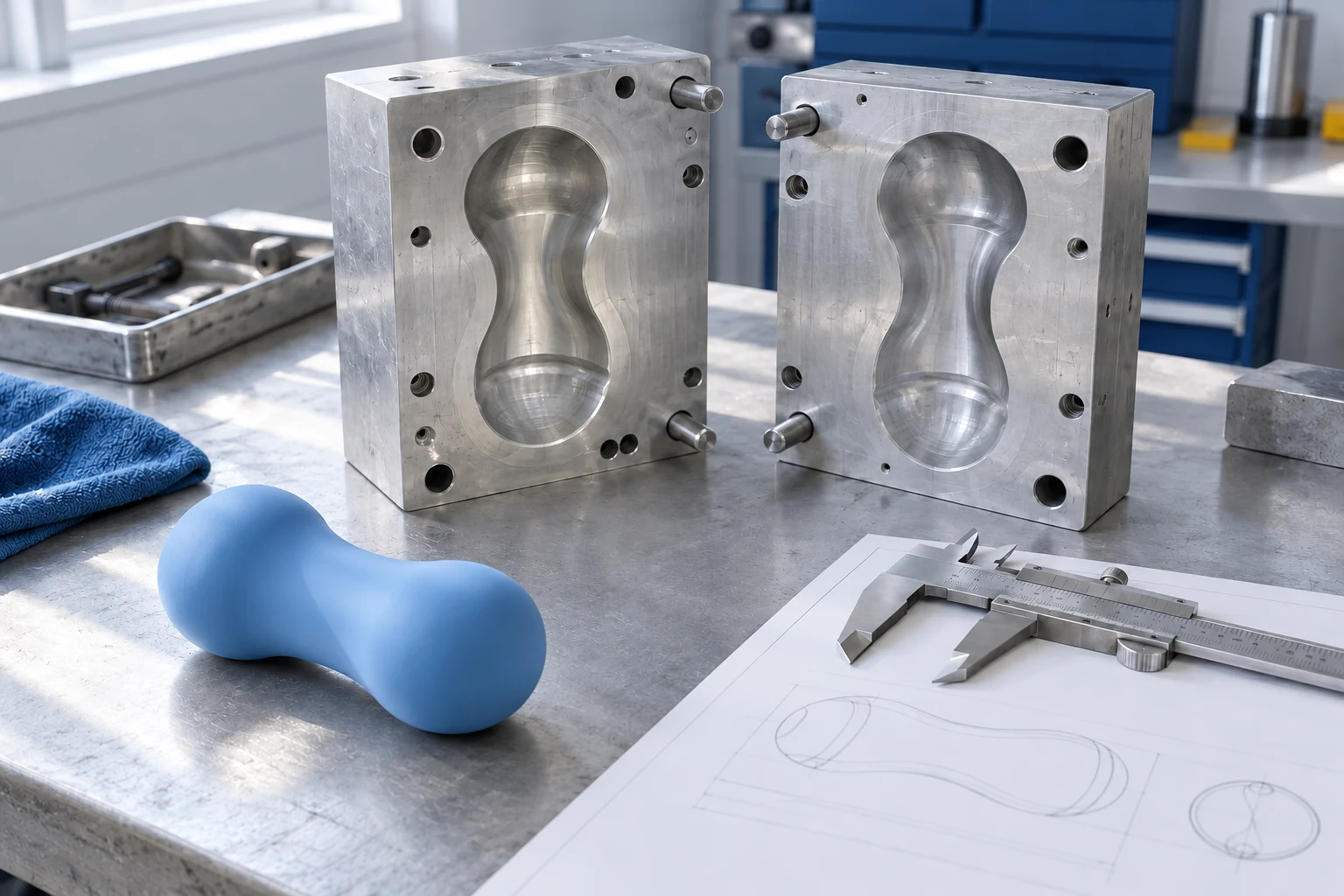
An existing design can shorten development
An ODM-style project often starts from an existing design or tooling platform. You may select colors, logos and packaging within agreed limits. Confirm whether the base design is offered to other buyers and whether any exclusivity can actually be granted. Existing tooling does not eliminate sampling or market-specific compliance work.
A custom design needs a controlled specification
An OEM-style project may be built from the buyer's drawings, references or functional requirements. Clarify who completes the engineering and who approves changes. Keep the bill of materials, drawings, approved samples and inspection requirements at a consistent revision.
Private mold does not define every right
A tooling agreement should specify ownership, authorized use, maintenance, storage, transfer and end-of-project arrangements. Separately review design rights, trademarks and any third-party intellectual property. A private mold can still produce a design that needs its own rights clearance.
Customization can change the testing scope
Changing a pigment, printing ink, filling, coating or accessory may require reassessment even when the base mold stays the same. Ask which existing reports cover the proposed version and what additional evidence is required. The faster route is the one with clear approvals, not the one with the fewest questions.
Select the route using your constraints
An existing design can suit a program focused on assortment and packaging. A new tool may suit a distinctive shape or controlled product architecture. Compare the initial investment, minimums, engineering effort, schedule, exclusivity and repeat-order control against the same business brief.
The route most of our customers actually take
In practice the decision is rarely all-or-nothing. New buyers typically begin ODM-style: in-stock models with custom packaging and logo printing at small MOQ, fast to market and easy to test. Programs that prove out move to custom colors and formulations on existing tooling, and only the sustained winners justify a private mold — at which point the specification history from the earlier stages already exists in one file. Treating OEM, ODM and private label as stepping stones rather than separate products is how our Chenghai account teams structure most multi-year customer programs.
Choose a development route
| Decision | Existing-design / ODM route | Custom-design / OEM route |
|---|---|---|
| Starting point | An existing design or tooling platform | Buyer brief, drawings or a newly engineered design |
| Design changes | Limited by the base platform and agreement | Defined by the engineering and tooling scope |
| Exclusivity | Must be negotiated; not implied by a private label | Defined separately from payment for the tool |
| Initial work | Sampling, variant selection and packaging | Engineering, tooling, trials and sampling |
| Test documents | Match existing scope to the chosen configuration | Build the scope around the new configuration |
| Best fit | An assortment or packaging-led program | A distinctive shape and controlled design program |
Questions & answers
Frequently asked questions.
Can I get exclusivity on an ODM catalog design?
Only if the factory can contractually grant it for the design, territory or period — a listing alone does not bind anything. If true exclusivity over the shape matters, a private mold with a written agreement is the secure route.
Do I need my own design to place an OEM order?
OEM can start from your drawings and references, but we can also complete engineering together from a functional brief. Clarify in advance who provides what, who approves changes and how design rights are allocated.
Is private label considered OEM or ODM?
Operationally it is customization on existing tooling — your colors, logo, packaging — without new molds. Labels matter less than the written scope: define MOQ, approvals, report coverage and repeat-order terms explicitly.
Who owns the design if the factory engineers it?
Engineering the shape does not automatically transfer design rights. The agreement should cover design ownership, tooling ownership, trademark and IP clearance, and authorized use separately for each.
Which route reaches the market fastest?
An existing-tool program with private-label packaging is normally fastest because no mold development is involved; it still requires sample approval and destination-specific compliance, but the critical path is materially shorter.
Apply this to your program
Bring a specific model into the discussion.
Attach your destination, expected quantity and approval requirements to the SKU.
Discuss Your Requirements