IQC: release the right materials
Incoming inspection connects the material or component to its specification and lot record. Shell compounds, fillings, pigments, coatings and packaging have different checks. Rejected material is separated from accepted stock, with the disposition recorded before it can re-enter production.
IPQC: inspect where variation begins
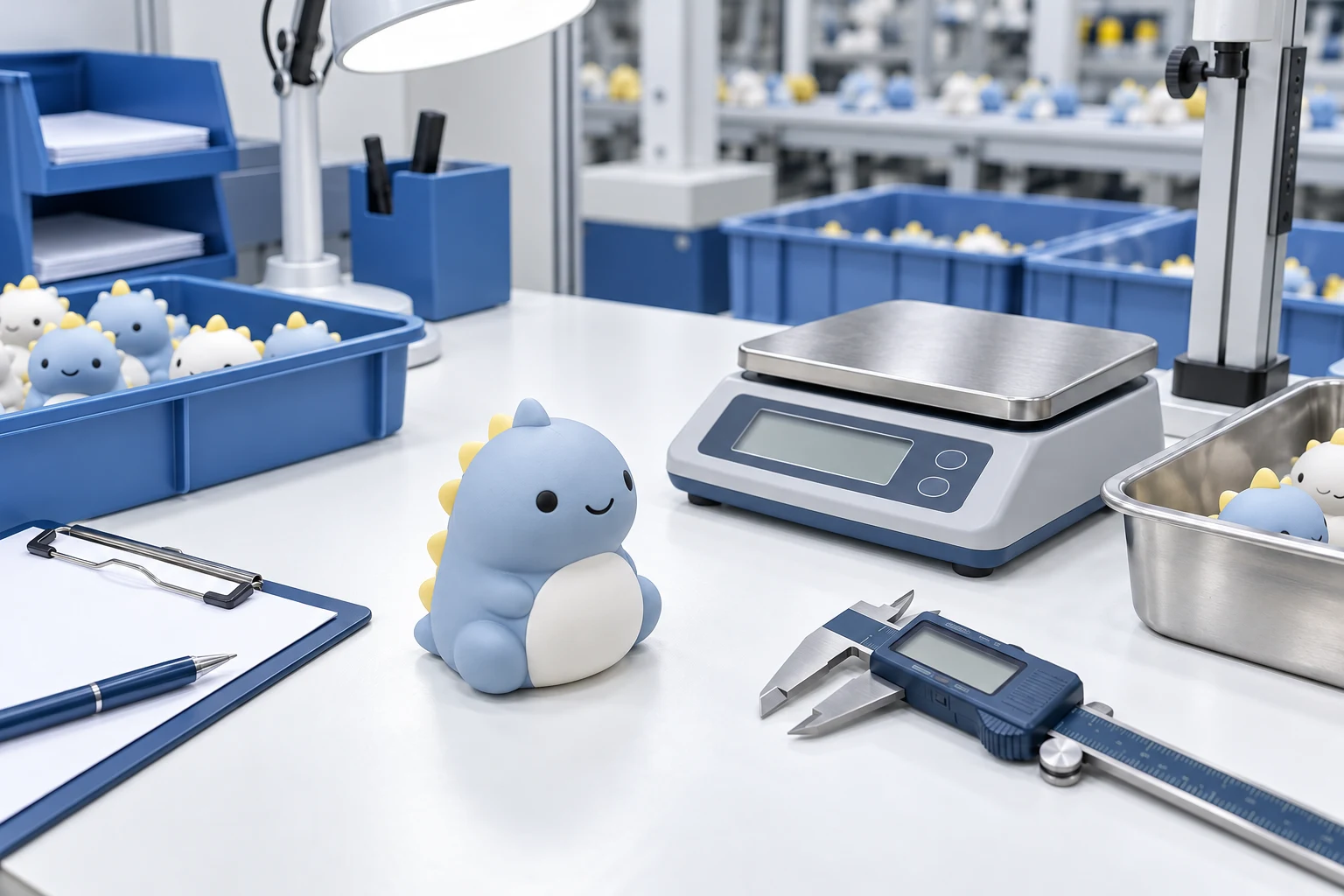
In-process checks follow the actual construction: molding, curing, filling, sealing, decoration or assembly. Dimensions, finished unit weight, appearance and function are compared with the approved reference. Filled squishy leak testing and seam checks are included where the model construction calls for them.
Final AQL inspection before loading
We agree the lot definition, sampling plan, inspection level and AQL values for the order. The inspection brief defines critical, major and minor defects using product-specific examples. Results, carton checks and release decisions are recorded before loading; sampling does not replace the required product-safety tests.
Change control protects the approved sample
A new pigment, filling, coating or component is a configuration change. We review the change against the production reference and the test-report scope before approval. This keeps a repeat order tied to the version your purchasing and compliance teams accepted.
Trace the lot and resolve the cause
The quality file connects sample references, measurements, inspection photographs and carton identification. A nonconformance triggers containment, investigation and corrective action. Rework or reinspection is recorded before the affected lot is released.
Defect prevention on high-volume container orders
On promotional and container programs — capsule toys for gashapon, advent-calendar blind boxes, logo giveaways and mixed party-favor assortments — the risk is consistency across tens of thousands of units. We freeze the approved sample, run first-piece approval at each shift and line, and hold in-process checks on filling weight, seam integrity, printing registration and assortment accuracy. The final AQL inspection then confirms the complete container against the same defect list your buying team approved, with carton counts, shipping marks and barcodes verified before loading.
Independent inspections are welcome
Many buyers run their own pre-shipment inspection alongside ours, and we coordinate SGS, Bureau Veritas, Intertek, QIMA or any nominated agency against the agreed sampling plan. Factory access, defect criteria, reinspection responsibility after a failed result and release authority are settled in the order file, so there is no ambiguity at the loading date. Inspections routinely cover our Chenghai site during live production of the ordered SKUs.
Inspection checkpoints
| Feature | Acceptance reference | Record |
|---|---|---|
| Feel and recovery | Approved sample and agreed method | Comparison and functional observations |
| Size and unit weight | Nominal values and tolerances | Measurement sheet |
| Filling and seams | Applicable integrity method | Leak and seam inspection results |
| Printing and surface | Artwork revision and defect criteria | Sample comparison and photographs |
| Retail and export packing | Barcode, warnings, assortment and count | Packing inspection and carton data |
Questions & answers
Frequently asked questions.
Which AQL standard and levels do you use?
The lot definition, sampling plan, inspection level and critical/major/minor AQL values are agreed with your team per order — most retail programs use recognized ANSI/ASQ Z1.4-style sampling. The inspection brief uses product-specific defect examples so results are directly comparable across repeat shipments.
How do you prevent filled squishy toys leaking?
Filled and sealed constructions receive seam-integrity and agreed leakage checks during IPQC, alongside filling-weight control and first-piece checks. Findings and the applicable test method are recorded against the lot before release.
Can our inspection company audit the goods?
Yes. We coordinate buyer-nominated pre-shipment inspections during live production at our Chenghai site and agree access, sampling, defect criteria, reinspection cost responsibility and release authority in advance.
What records come with each shipment?
The quality file identifies the SKU and production lot, approved sample revision, in-process and final inspection results, measurement sheets, inspection photographs, carton data and the agreed test documents, giving your quality team a complete traceability trail.
How are repeat orders kept consistent?
Production remains tied to the signed reference sample and specification revision; any new pigment, filling, coating or component is treated as a configuration change and reviewed — including against the test-report scope — before it can enter production.
What happens if a lot fails final inspection?
A nonconformance triggers containment, root-cause investigation and corrective action. Rework or reinspection is completed and recorded before the affected lot is released; who commissions and pays for reinspection is defined in the order file.