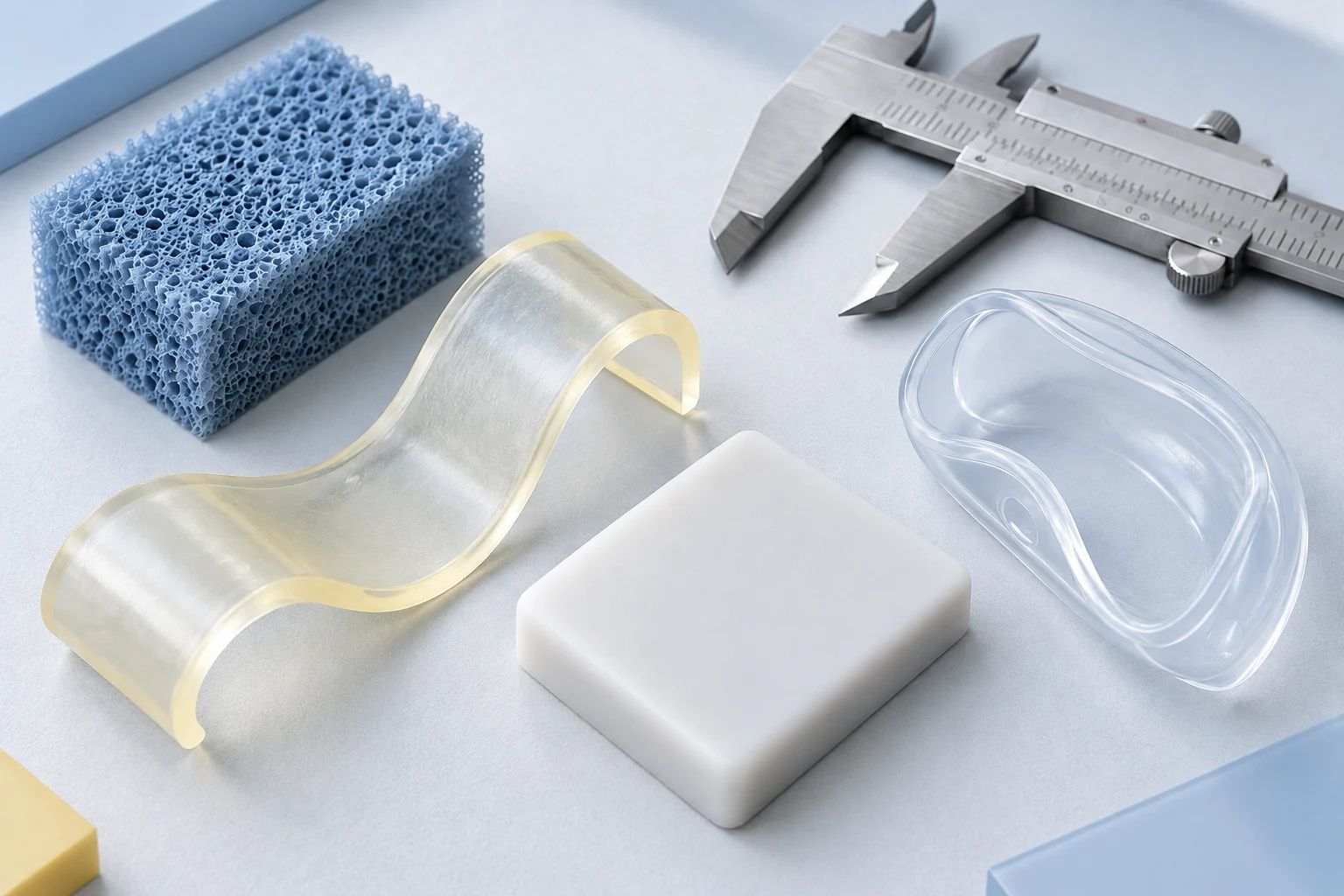
PU foam: evaluate density and rebound
Polyurethane foam is commonly associated with compressible, slow-rebound designs, but performance depends on the formulation and structure. Review rebound, finished density, surface coating, tearing and aging against an approved reference. Do not assume all foam products have the same recovery rate or chemical profile.
TPR: distinguish shell from filling
Thermoplastic rubber is a broad commercial description covering different compounds. Some squeeze toys use a flexible shell around a separate filling. Record the shell and filling independently, including colorants and any surface treatment. Inspect seams and filling integrity using methods agreed for the product.
Silicone: confirm the compound and cure
Silicone designs can offer a distinct elastic feel and use different molding and curing routes from thermoplastic products. The compound, additives and cure conditions matter. A supplier's general reference to silicone does not establish food-contact suitability, toy compliance or a particular durability result.
TPU is not another name for PU foam
Thermoplastic polyurethane and polyurethane foam share part of a name but are different material forms and processing choices. Avoid changing the material name simply to target a search keyword. Ask for the product's actual material specification and compare it with the tested sample description.
Compare samples with a consistent brief
Specify nominal size, weight, compression feel, recovery behavior, appearance and expected use conditions. Evaluate odor and surface condition without treating a subjective observation as a laboratory result. Where tear resistance, repeated squeezing or aging matters, agree a method and acceptance criteria in advance.
Make safety claims from evidence
No material family makes a toy automatically safe or compliant. Review the finished product, age grade, accessible components and destination-market requirements. Formulation, colors, coatings and fillings can affect test scope. Ask a qualified laboratory to confirm the assessment required for the selected configuration.
Matching material to channel: wholesale, FBA and promotions
Material choice follows the sales channel. Slow-rise PU foam remains a strong, low-cost line for gift shops, dollar stores and collectible programs; filled TPR designs dominate the visual food-simulation segment — baozi, dumplings, ice cubes — and photograph well for Amazon and social retail; silicone suits premium, washable and adult-desk positioning; gel- and bead-filled constructions drive novelty and gashapon assortments. Our Chenghai lines run all four routes, so shortlists can mix constructions in one container while each SKU keeps its own material and test record.
Material comparison for a sampling brief
| Material family | Construction question | Sample review |
|---|---|---|
| Slow-rise PU foam | What formulation, density and coating form the finished toy? | Recovery, surface condition and shape retention |
| TPR compound | Is this a solid part or a shell with a separate filling? | Elastic feel, seams and integrity where filled |
| Silicone | What compound, additives and cure specification are used? | Elastic response, finish and the approved geometry |
| TPU | Which thermoplastic polyurethane grade and part are specified? | Actual component properties; do not assume PU foam behavior |
| Any finished toy | Which pigments, fillings, coatings and accessories are accessible? | SKU-specific age grade, test scope and change control |
Questions & answers
Frequently asked questions.
Which squishy material is safest?
Safety is a property of the finished, tested product — material, colors, coatings, filling and age grade together — not of a polymer name. Any material family can be compliant when produced and tested correctly for your destination.
Is slow-rise PU foam durable?
Density, formulation and surface coating determine tear resistance, recovery and aging. Evaluate those against an approved sample with an agreed method rather than assuming foam performance is uniform across suppliers.
What is inside a filled TPR squishy?
Filled designs use a soft TPR shell around materials such as gel, maltose-style filling, beads or liquid; shell and filling are specified separately, and seam integrity and leakage checks apply to the construction.
Is silicone squishy food-grade?
A supplier saying "silicone" does not establish food-contact suitability. The compound, additives, cure and intended use decide; require supporting evidence and appropriate testing if food-contact positioning is planned.
Can we mix different materials in one wholesale order?
Yes. Mixed-assortment containers commonly combine PU foam, TPR, silicone and plastic novelty SKUs; each model carries its own specification and report scope, and the packing file records the complete assortment.
Source documents & further reading
Check the requirements applicable to your product and placing-on-market date.
Apply this to your program
Bring a specific model into the discussion.
Attach your destination, expected quantity and approval requirements to the SKU.
Discuss Your Requirements