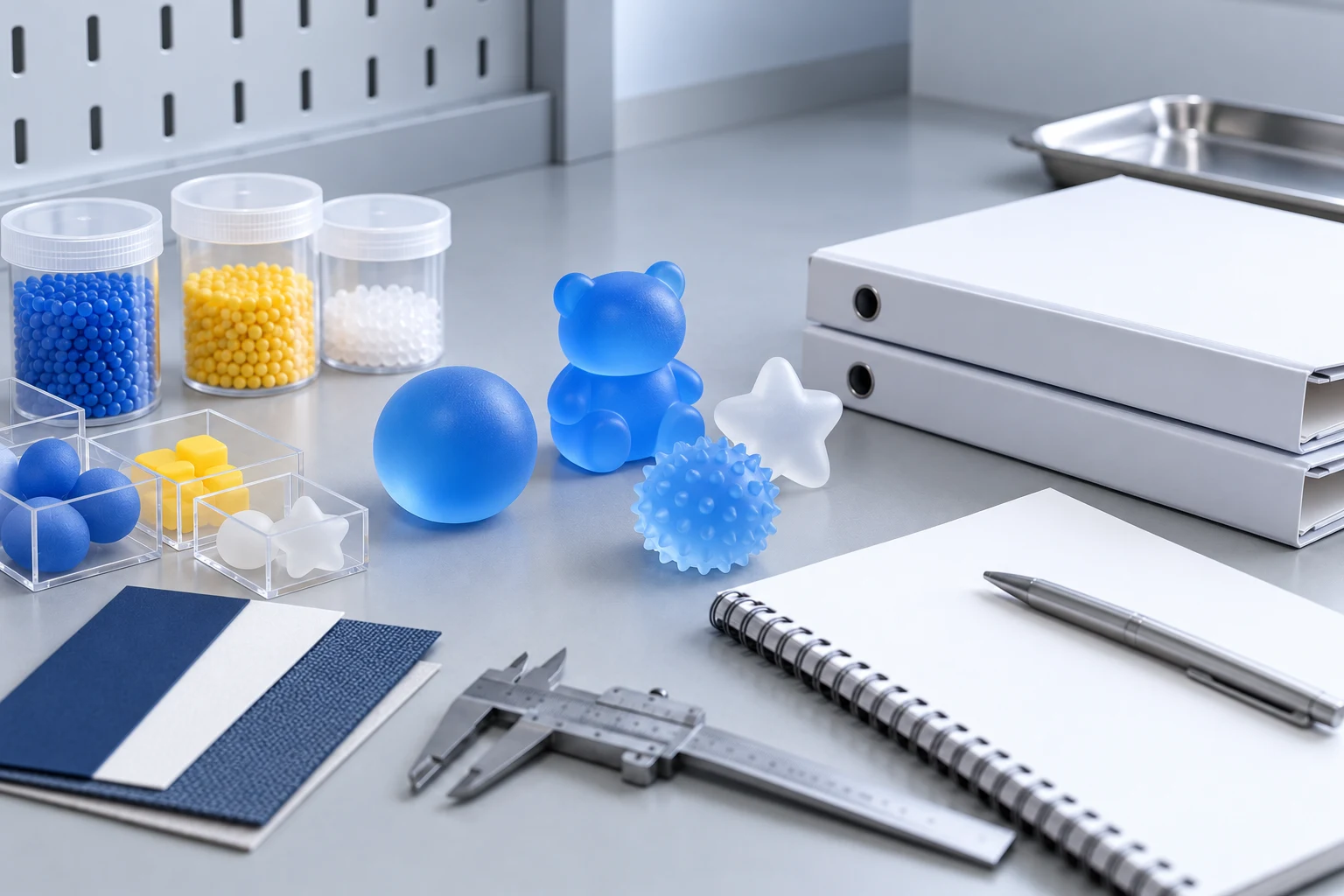
Begin with the product definition
Record the intended age group, use, materials, components and destination. Review detachable parts, magnets, batteries, coatings and fillings where present. The testing scope follows the construction and applicable rules; a report for a different toy cannot establish your product's compliance.
Check the report identity
Review the report number, issue date, applicant, manufacturer, laboratory and sample description. Compare photographs and model numbers with the approved sample. If a report lists several models, ask how the tested samples represent your selected variant. Confirm the laboratory's relevant CPSC acceptance where third-party testing is required.
Read the scope before the conclusion
A passing result applies to the tests and samples identified in the report. Review which ASTM F963 provisions and other applicable requirements were assessed, including lead or phthalate requirements where relevant. Check exclusions, remarks, subcontracted tests and any limits on interpretation. A PASS on one chemical test is not an overall toy-safety determination.
Match each component and color
Review the tested materials against the bill of materials. A new pigment, coating, adhesive, filling or accessory can require additional assessment. Ask the laboratory or responsible compliance specialist to explain whether the report supports the proposed configuration. Keep the explanation and any additional reports in the product file.
Distinguish a report from a CPC
For children's products subject to applicable US rules, the responsible domestic manufacturer or importer issues the Children's Product Certificate based on the required evidence. The CPC and laboratory report serve different roles. Check the product identity, applicable rules, responsible party, records contact, manufacturing information and testing details required for the certificate.
Maintain evidence after approval
Keep the approved sample, report, specification revision and production-lot information connected. Review material changes, periodic testing obligations and tracking-label requirements as applicable. Ask the compliance owner to resolve gaps before the goods are released, not after they arrive at the distribution center.
What good supplier reports look like in practice
Experienced Chenghai exporters organize test documentation the way reviewers read it: one file per model, report number and laboratory visible on the first page, photographs identifying the tested configuration, a model-coverage list, and dates that match the production version being shipped. When private-label colors or printed logos change the configuration, a supporting report or targeted retest accompanies the change. That presentation is not cosmetic — it is what allows an Amazon document request or a customs query to be answered in hours rather than while a container sits at the port.
A report review in six checks
| Check | Match against | Action when it differs |
|---|---|---|
| Report identity | Issuing lab, report number, date and all pages | Verify authenticity with the issuer through an independent contact |
| Sample identity | SKU, photographs, dimensions and variant | Obtain the model relationship and tested-sample explanation |
| Construction | Shell, filling, color, coating and components | Review whether changed components require further testing |
| Test scope | Applicable provisions for the product and age grade | Ask the responsible laboratory to identify gaps |
| Results and remarks | Individual outcomes, exclusions and amendments | Resolve exclusions before accepting the report file |
| Certification file | Responsible issuer and required CPC information | Keep the laboratory report and required certification distinct |
Questions & answers
Frequently asked questions.
What is the difference between a CPSIA test report and a CPC?
The laboratory report records test results for an identified sample; the Children's Product Certificate is issued by the responsible US importer or domestic manufacturer based on the required evidence. One is evidence, the other is a certification document — compliance needs both where applicable.
How do I verify a test report is genuine?
Check report number, issuing laboratory, applicant, dates and sample description, then verify through the laboratory or the CPSC-accepted laboratory register using an independently found contact, never only links supplied by the seller.
Does a passing report cover all color variations?
Not automatically. Coverage depends on whether the colors share materials and pigments and how the laboratory lists the models; new pigments, coatings or fillings frequently require additional assessment.
Which ASTM F963 sections matter for a squeeze toy?
The applicable provisions follow the construction — typically mechanical and physical requirements, relevant chemical requirements including lead and phthalates where applicable, plus anything triggered by magnets, batteries, liquid filling or age grade. Ask the laboratory to scope the exact model.
How long are toy test reports valid?
Reports do not carry a universal expiry date, but they apply only while the product, materials, standards and rules remain unchanged. Periodic-testing obligations, standard updates and configuration changes can require new testing; track each against the placing-on-market date.
Source documents & further reading
Check the requirements applicable to your product and placing-on-market date.
Apply this to your program
Bring a specific model into the discussion.
Attach your destination, expected quantity and approval requirements to the SKU.
Discuss Your Requirements