2026-10-30
Release an incoming squishy material lot to production only when its identity, approved specification, supporting evidence and inspection results meet the agreed acceptance criteria. For squishy toy quality control, record the supplier lot, material code, COA scope, color reference, retained material and quarantine status before material issue. Hold unresolved documentation or scope questions; quarantine confirmed nonconforming material. Each decision needs a named approver, a date and a traceable link to the production order—not just a checked box.
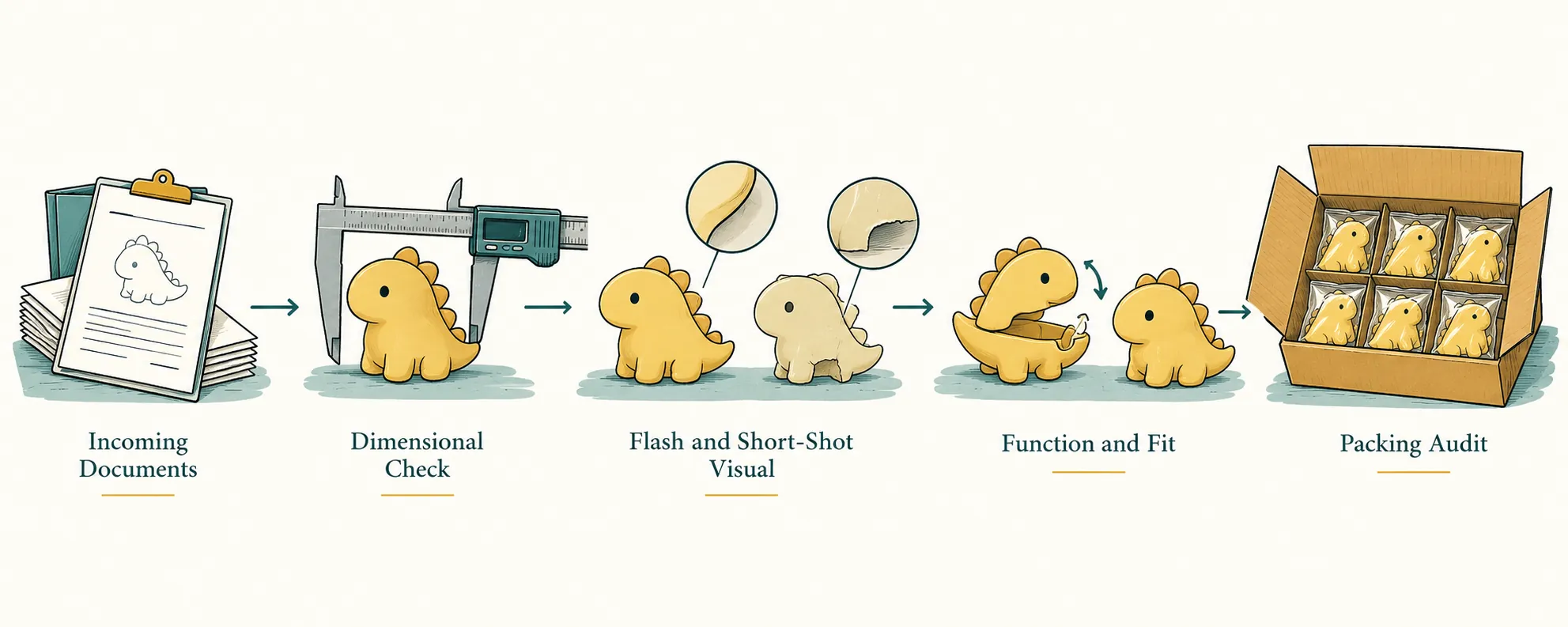
Incoming Material Inspection Checklist
Use one inspection record per supplier lot and material code, with separate entries for different colors or components where needed. The checklist below is a proposed purchasing control, not a completed inspection: enter the approved target and the actual observation separately, then record the result and supporting evidence.
| Order, model and revision | Approved target: identify the purchase order, production order, model and approved material specification revision. Observation: record the identifiers on the delivery and accompanying documents. Check: confirm that the receipt is assigned to the correct configuration. For a model selected from Squishy Toys, use its model-specific approval record rather than the collection name as the acceptance reference. |
|---|---|
| Supplier lot | Approved target: require a supplier batch identifier linked to the ordered material. Observation: transcribe the lot identifiers from container labels, delivery documents and the COA; record received quantity and package condition. Check: reconcile differences and keep distinct lots identifiable rather than combining them under one receipt number. |
| COA scope | Approved target: list the properties, methods and acceptance limits required by the purchasing specification. Observation: record the certificate of analysis identifier, issuer, issue date, material code, covered lot, reported results and referenced methods. Check: confirm that the COA covers the received material and agreed properties; identify any intended-use or destination-market evidence that must be reviewed separately. |
| Color reference | Approved target: identify the signed physical standard or agreed color reference and revision, with the viewing or measurement conditions and acceptance criteria. Observation: record the controlled-light visual comparison and any instrument results separately. Check: use the agreed substrate, surface finish and sample preparation; retain photographs as supplementary records. |
| Sampling and material condition | Approved target: define the sampling method, sample preparation, conditioning and material-specific acceptance checks before inspection. Observation: record where samples were taken, sample identities, test conditions and actual findings, including damaged packaging, visible contamination or unexpected separation where relevant. Check: judge results against the specified method, not an improvised squeeze or touch assessment. |
| Retained material | Approved target: define the amount, container, storage conditions and retention period needed for the planned investigations. Observation: record the retained-sample identifier, supplier lot, material code, color reference, sampling date, sampler and storage location. Check: confirm that the sample came from the received lot and remains identifiable and suitable for its intended comparison. |
| Quarantine status | Approved target: define which stock statuses permit or prohibit production issue. Observation: record release, hold or quarantine status together with quantity, location, reason, responsible person and release authority. Check: confirm that physical segregation and inventory controls agree with the recorded disposition. |
| Decision and authorization | Approved target: name the authorized quality approver and any compliance escalation authority. Observation: record the decision, specification revision used, approver, decision date and any conditions. Check: distinguish approval of a document correction from approval to issue the material. |
| Follow-up closure | Approved target: assign an owner and due date for each unresolved condition. Observation: attach corrected documents, reinspection or test evidence, and the closure decision. Check: record who closed the issue and when, and reconcile the released, returned or otherwise dispositioned quantity with inventory. |
How should COA scope be checked against the material code?
A usable COA must connect the received lot to the approved material code and the properties required by the purchasing specification. Read its identity fields before its results: a passing value for a different grade or an unlinked batch does not resolve acceptance of the delivery.
Compare each required property with the reported method, units, acceptance limit and result. A technical data sheet with typical values is not a substitute for lot-specific results when the purchase specification calls for them. Where preparation or conditioning affects the measurement, record those conditions as part of the comparison.
Keep material acceptance separate from finished-toy evidence. A COA for a casing material does not establish the identity of its filling, and a pigment certificate does not establish coverage of the assembled toy. Match supporting reports to the tested construction, materials, colors and applicable rules; neither assume automatic coverage of later production nor require a new report solely because an internal lot or SKU identifier changes.
Record the destination market and intended use so the responsible compliance reviewer can assess the supporting evidence. Incoming inspection is not a substitute for laboratory safety testing. Squishy toy inspection
What makes a color check repeatable?
A repeatable color check uses an approved reference under agreed viewing or measurement conditions, with the actual observation recorded separately from the target. A phone image can document an obvious difference, but it should not be the sole acceptance record.
Record surface finish and instrument mode when comparing glossy or matte prepared samples; measurement geometry and treatment of specular reflection affect the comparison. Any numerical tolerance should be an agreed purchasing criterion, not presented as a universal toy-safety limit. X-Rite reflective-surface measurement
How should retained material and quarantined stock be controlled?
Retained material needs a traceable sample identity, while quarantined stock needs controls that prevent unauthorized production issue. Neither a sample bag marked “approved” nor a quarantine sticker is sufficient on its own.
Take retained material from the inspected lot using the agreed sampling method. Label it with the supplier lot, material code, color reference, sampling date and inspection-record reference. Set retention duration and storage conditions to support the buyer's market-specific traceability and recall needs, supplier investigations and the material's stability; do not apply an arbitrary universal period.
For held or quarantined stock, record the affected quantity, storage location, reason, responsible owner and authorized release route. Reconcile warehouse status with the production-issue record. If some material has already been issued, identify the affected production orders and escalate their containment rather than treating the remaining warehouse quantity as the whole problem.
These records support traceability and review. They do not, by themselves, detect an undisclosed substitution or prove that stock never reached production.
When should a lot be released, held or quarantined?
Release a lot when the agreed acceptance evidence supports production use; hold an unresolved assessment; quarantine a confirmed nonconformance or a credible safety concern pending disposition. Both hold and quarantine should block production issue, but their reasons and closure requirements differ.
| Release | Use when lot identity, material code, required evidence, color assessment and applicable incoming checks match the approved specification, and retained material is recorded. The authorized quality approver signs and dates the release against the identified revision. Record any restrictions on quantity or permitted use. |
|---|---|
| Hold | Use when a document, identity link, observation or report-scope assessment remains unresolved and conformity has not yet been established. Block issue, assign an owner and due date, and state the exact evidence needed to close the question. A missing field alone does not prove that the material is nonconforming. |
| Quarantine | Use when inspection confirms a specification failure, an unauthorized substitution is identified, or a credible safety concern requires containment. Isolate the affected stock and record the evidence and scope. One safety-related failure can justify a stop; recurrence across several models is not a prerequisite. |
| Return or other approved disposition | Return rejected material when the authorized decision requires it, or document another technically justified disposition. Record supplier acknowledgment, quantities and stock movement. Do not release a failed lot merely because replacement evidence has been promised. |
| Closure and status change | Attach the evidence resolving the original condition, record any required reinspection, and obtain approval from the named authority before changing stock status. Preserve the original observation and decision history; do not overwrite a failure with an unexplained pass. |
What report should be requested before material release?
Request a completed, lot-specific incoming-material inspection report before authorizing production issue. Ask for the linked container-label record, COA, approved material and color revisions, target-versus-observation results, retained-sample identifier, stock disposition, approver and decision date, plus closure evidence for any hold or quarantine. The report should make it possible to trace the release decision back to the actual material—not merely to an approved sample.
Use the model-matched test-document guidance to organize supporting documents, and compare the proposed stock-control steps with the supplier-described incoming checkpoint in Quality Control. These guides support preparation and review; neither is evidence that the received lot has passed inspection or been excluded from production while held.
Put this into your procurement file.
Send the model, destination and approval scope to our team.
Request Audit Documents