2026-10-23
A usable filled-squishy leak-check instruction must define conditioning, squeeze action, seam observations, recording fields, and release decisions against an agreed model specification. For squishy toy quality control, approve those settings before production inspection rather than letting each inspector squeeze by feel. Compare the first sample with the specification before creating an approved reference; compare production units with both that reference and the current specification. Hold confirmed leaks for documented disposition and recheck before release.
Weak seams, tears, cracks, and leaking liquid or gel are among the warning signs identified in New Zealand consumer guidance. The checklist below is a proposed purchasing screen, not a regulatory test method or safety certification. Its operating values and acceptance rules must be agreed by the buyer and supplier. Product Safety New Zealand
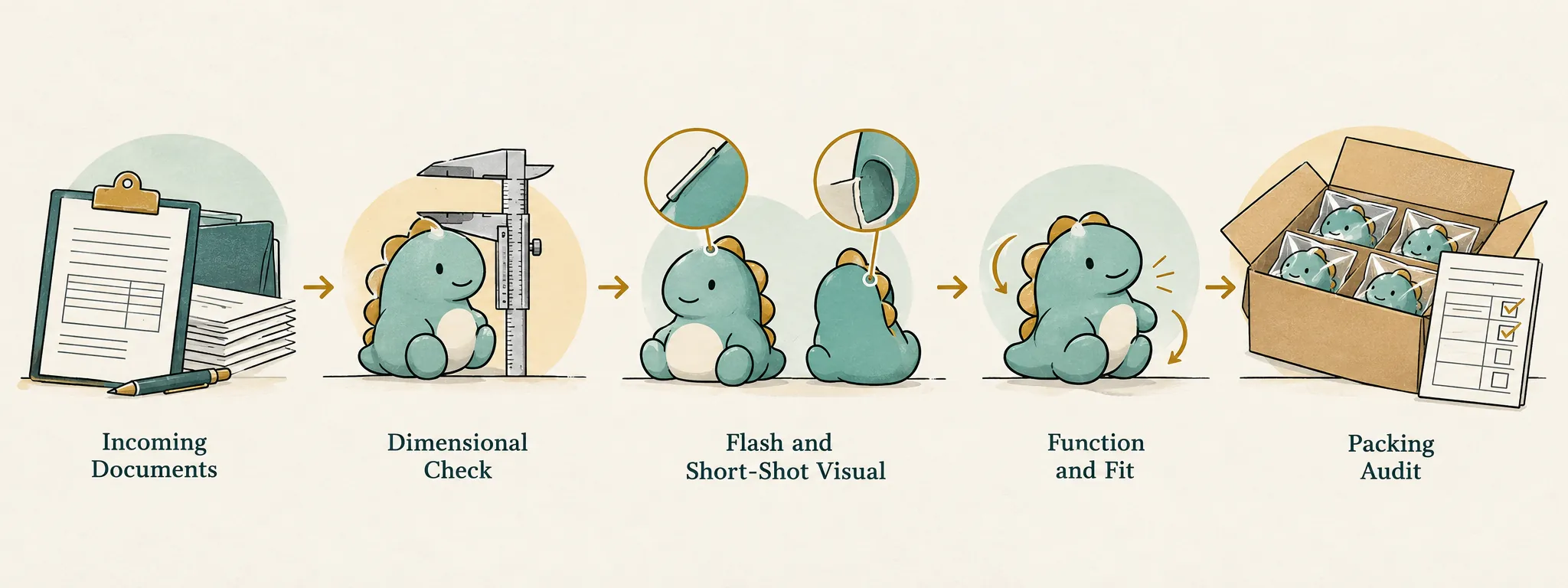
Which record should the inspector compare with the toy?
Before first sample approval, compare the toy with the agreed specification; during production or pre-shipment inspection, use the current specification and the approved reference together.
A category such as Squishy Toys helps locate a product, but it does not define its inspection requirements. Identify the exact model, filling configuration, recorded shell or component material, color, sealing arrangement, and revision. Do not infer the filling or the whole toy’s construction from a photograph or a single material field.
For the first sample, record deviations from the specification and obtain correction or written approval before establishing the reference. Identify the approved reference by revision, approval date, and approving person, and retain baseline photographs of its body, seams, and fill closure where present. A missing side-by-side photograph alone does not invalidate an otherwise traceable inspection.
For production checks, verify that the reference still represents the ordered configuration. Keep any supporting test report aligned with the model, construction, color, intended age group, and destination covered by its scope; a report for one model is not category-wide evidence. Review configuration changes before approval. Model documentation
What settings must be agreed before the leak check starts?
| Lot and sampling plan | Define the production lot, sample quantity, selection method across the lot, defect classifications, acceptance and rejection rules, and stop conditions. Keep different filling or sealing configurations separately identifiable. |
|---|---|
| Sample conditioning | Specify temperature, relative humidity, duration, whether samples remain packaged, permitted ranges, and the action required after an excursion. Record actual conditions and conditioning start and finish times. |
| Squeeze position and compression endpoint | Identify the toy’s orientation, hand or fixture contact locations, supporting surface, and a reproducible compression endpoint. If force is a controlled parameter, specify suitable equipment and its required verification; do not estimate force from hand feel. |
| Squeeze sequence | Define the compression action, hold duration, release action, recovery interval, number of cycles, and any orientation changes. State when to stop after a defect appears. |
| Observation conditions | Set the lighting, background, examination locations, and observation times before, during, immediately after, and after the agreed recovery period. Specify whether to use a clean, dry absorbent witness surface. |
| Defect and disposition rules | Recommended buyer rule: treat confirmed filling escape or a new through-opening as release-blocking. Define how to handle weak-looking seams, unexplained residue, interrupted checks, and uncertain findings, including who can authorize further examination or release. |
How should inspectors perform and record the leak check?
| Identity and reference check | Input: selected production unit, lot information, current specification, and approved reference. Action: confirm model, filling configuration, color, and revision before handling. Record: unit identifier, lot, reference revision, and any mismatch. Failure signal: wrong configuration or an unresolved difference from the approved specification. Next decision: segregate the mismatch and resolve its identity; do not record a valid release result against the wrong reference. |
|---|---|
| Conditioning | Input: identified samples and the approved conditioning settings. Action: condition samples in the specified packaged or unpackaged state for the agreed duration and conditions. Record: actual temperature, humidity, start and finish times, and excursions. Failure signal: conditions outside the agreed range or incomplete conditioning. Next decision: hold the affected check and follow the approved reconditioning or deviation decision before proceeding. |
| Baseline examination | Input: conditioned unit, clean dry examination surface, specification, and reference. Action: inspect the body, complete seam path, seam junctions, and fill closure where present before squeezing. Record: pre-existing tears, cracks, gaps, moisture, residue, or loose filling, with location and photographs. Failure signal: an existing leak, opening, or unresolved abnormality. Next decision: isolate a confirmed leaking unit; refer uncertain residue for review rather than wiping it away and treating the unit as initially clean. |
| Controlled squeeze action | Input: baseline-checked unit and approved squeeze settings. Action: use the specified orientation, contact locations, compression endpoint, hold, release, recovery interval, and cycle count. Observe seams and closures without obstructing the view. Record: completed cycles, actual settings where measured, deviations, and the point when a defect first appears. Failure signal: filling escape, a new opening, or inability to follow the method. Next decision: stop at the agreed stop condition, isolate the unit, and distinguish a product defect from an invalid or interrupted check. |
| Post-squeeze examination | Input: screened unit, baseline observations, and a fresh dry witness surface if specified. Action: examine the full body and seams immediately after the sequence and after the agreed recovery period; look for a wet trace, emerging filling, cracks, seam separation, or closure movement. Record: exact location, observation time, photographs, and comparison with baseline. Failure signal: a new leak, through-opening, or unresolved residue. Next decision: classify under the agreed defect rules; do not assume surface tack or moisture is harmless or automatically proof of filling leakage. |
| Result and containment | Input: completed unit records and the lot sampling plan. Action: total the units examined and findings by configuration, distinguish valid results from interrupted checks, and apply the agreed acceptance rules. Record: defect counts, affected unit and carton identifiers where available, containment scope, and disposition owner. Failure signal: a release-blocking finding, exceeded acceptance criterion, or unresolved result. Next decision: hold the affected lot or traceable portion pending authorized disposition, correction, and recheck. |
What should happen when a seam leaks?
A confirmed leak should trigger containment and documented disposition, not an informal repair followed by an unrecorded second squeeze.
Hypothetical example: a unit is dry at baseline, but a fresh wet trace emerges from a seam junction during the agreed squeeze sequence. Record the unit identifier, seam location, cycle at first observation, settings used, and photographs. Under the proposed release-blocking rule, isolate that unit and hold the affected lot or traceable portion while the responsible team determines the scope and correction. A different unit passing does not cancel the original failure.
Keep defective units contained and out of saleable stock. Record the investigation, approved corrective action, responsible person, and affected quantities. Do not patch a shell or closure with an improvised adhesive. A proposed change to the sealing process, shell, filling, or closure needs review against the specification and relevant supporting evidence before acceptance.
Recheck corrected goods using the approved method and an agreed verification sampling plan. Retain the original findings alongside the correction and recheck results. Release requires the named authority’s approval after the agreed inspection criteria and any other applicable release requirements have been met.
What must the final inspection report contain?
The final report must connect each finding to the model, inspection conditions, reference revision, disposition, and person authorized to release the goods.
Use a record containing model/SKU, filling configuration, sample or reference revision, production lot, inspection date, inspector, unit identifiers, sampling-plan revision, actual conditioning, squeeze-method revision and settings, completed cycles, before-and-after observations, defect photographs, disposition, corrective-action reference, recheck result, and release authority. This is a proposed report structure, not a record of a completed inspection.
Keep the conclusions separate: visual inspection documents visible condition; squeeze screening checks behavior under the agreed action; sampling supports a lot decision under the agreed plan; laboratory testing addresses specified safety properties. A hand check cannot establish chemical safety, determine an age grade, or certify overall toy safety.
Do not turn the purchasing screen into a cut-open, puncture, or deliberate burst exercise. New Zealand consumer guidance warns that those actions can expose filling materials. Any separate destructive or safety evaluation should follow its specified laboratory method and handling controls. Product Safety New Zealand
For a model-specific inspection-report review, submit the specification revision, approved-reference identification, proposed parameter sheet, and draft report. Request an annotated check of traceability, squeeze-method repeatability, leak classification, containment, and recheck authorization before approving the instruction for production use.
Sources
- Viral squishy toys – Product Safety New Zealand
Put this into your procurement file.
Send the model, destination and approval scope to our team.
Request Audit Documents