2026-10-16
Build the match row by row before you approve: model number, product photograph, material, color, size, age scope, sample date and the test sections actually covered. Squishy toy quality control fails at the paperwork stage when a report is treated as blanket evidence for a whole catalog — a standard name alone does not establish the report scope for the ordered configuration. The practical outcome: one approved configuration per SKU, documented report scope for that configuration, and a signed cross-reference sheet that a compliance team can audit in minutes.
This checklist is written for retail-chain buyers and compliance-led sourcing managers who already have a shortlist and need to lock specifications before a purchase order. It separates what a supplier states from what a buyer should independently verify, and it treats every mismatch as a stop-and-resolve item rather than a note for later.
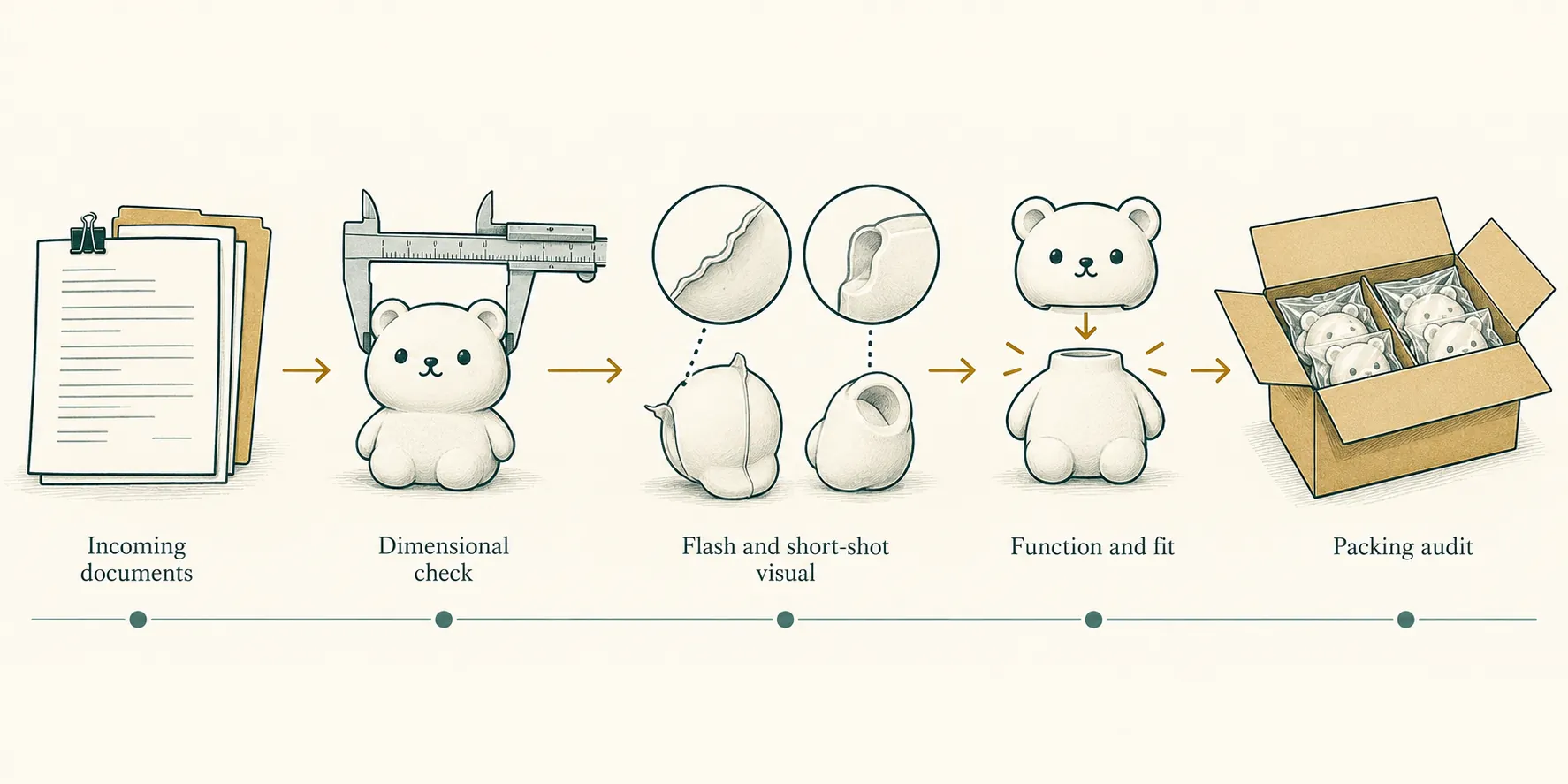
Why does a report for one squishy model not cover the rest of the catalog?
Test coverage attaches to the sample and the exact model configuration, not to a product family name. A report issued for a penguin-shaped TPR squeeze toy does not extend to a different animal shape, a different hardness, a different paint system or a different age grade, even when both are sold under the same squishy category. The buyer's job is to prove the report's sample and the ordered SKU are the same thing.
Match the actual construction and age scope to the report's listed test sections. A catalog category alone does not identify which hazards or test sections apply. Keep the matching evidence with the purchase-order specification.
The supplier describes its document support as SKU-matched. This is a supplier statement, not proof that a product meets any market's legal requirements. Independently compare the actual report and approved configuration before relying on that statement.
Row-by-row match: what to compare, and what a mismatch means
| Model / item number | Report sample model must equal the ordered SKU. Mismatch: stop; request a report naming the ordered model or a documented scope extension. |
|---|---|
| Product photograph | Compare the report's sample photo against the current production photo, including shape, seams, eyes, paint and any attached parts. Mismatch: treat as a different configuration until the supplier documents otherwise. |
| Material | Confirm the base material family (for example TPR, PU foam, silicone-type compounds) and any filler or coating. Mismatch: the tested construction is not the ordered construction. |
| Color | Color and packaging are change-review fields. Suggested buyer action: request a written assessment of whether the proposed change needs additional testing; this checklist does not declare an existing report invalid. |
| Size | Record finished dimensions, not carton dimensions. A carton measurement is not a unit measurement and cannot substitute for it. |
| Age scope | Record the selected SKU's construction, age scope and destination market; compare these fields with the report and approved artwork. |
| Sample date | Record when the tested sample was produced and whether the current construction has changed since. An undated or superseded sample weakens the match. |
| Test sections | List the clauses actually covered — mechanical and physical, flammability, migration of certain elements, phthalates, heavy metals, battery or magnet provisions as applicable. A certificate name alone is not a test-section list. |
| Packaging and warnings | Check that packaging, age warnings and any battery or magnet warnings match the tested configuration. For packaging changes, request a written scope review instead of assuming whether new testing is needed. |
How to run the match as an inspection routine, not a one-time document check
A document check done once at sourcing is not quality control; it is a snapshot. Build the match into three points where it can still change the outcome.
First, at shortlist stage, request the report set for each candidate SKU and fill the sheet above. Anything you cannot fill is an open item, not a passed item. Second, at sample approval, photograph the approved sample against a ruler and a color reference, sign and date the approval, and store it against the SKU number. Third, at pre-shipment, compare the production unit against the approved sample photo and confirm the report still names the ordered model and configuration.
Where a supplier operates a documented change-control process, ask for the change record rather than a verbal assurance: what changed, when, and whether the change was assessed against the tested scope. Where a defect appears in one lot, isolate that lot, record the defect class, and release only after rework or a documented disposition. A single safety failure is enough to stop a specification and re-verify the report match; you do not need to wait for the same defect to appear across several SKUs before acting.
Keep the resulting records — material declarations, production and inspection notes, change control and test documents — long enough to support your own market and recall obligations. The retention period follows your market's rules and your own recall plan, so set it deliberately rather than defaulting to the supplier's filing habit.
Which squishy toy quality control checks are observed facts and which are proposed buyer criteria?
Separate the two on the sheet, because they carry different weight in a dispute. Observed facts are things you can see and record: the model number printed on the report, the sample photograph, the measured dimensions, the stated material, the sample date, the listed test sections. Proposed buyer criteria are the standards you choose to apply: an inspection plan agreed on the purchase order, a defect classification scheme, a lot-isolation rule, a re-inspection trigger.
Suggested inspection-planning method: take the AQL number from the inspection plan agreed on the purchase order; a catalog sentence does not replace that agreement. If you want a numeric acceptance level, put it in the agreed inspection plan on the purchase order, where it can be applied to a defined lot and a defined defect class. On the floor, the workable routine is to isolate a failed lot, record the defect class, and release only after rework — the number supports that routine, it does not replace it.
The same discipline applies to age grading. A squishy toy sold as a stress-relief item for adults and a squishy toy marketed to young children are different products for compliance purposes, even if they share a mold. Keep the age scope on the SKU record and on the packaging, and never let a single age rating migrate across a mixed shortlist.
What to do when the report and the SKU do not match
Treat a mismatch as a decision point with three options, not a negotiation to be softened. If the report names a different model, request a report for the ordered model or a written scope extension from the testing body. If the difference is a custom color or custom packaging, request a written testing-scope review for the proposed configuration before order approval. If the difference is the age scope or a safety-relevant construction change, stop the specification and re-verify before any further production.
When you are ready to formalize the check, the practical next step is to request the SKU test documents for your shortlisted models and run the sheet above against them. SKU Test Documents gives you the report set to compare, row by row, against the model, photograph, material, color, size, age scope, sample date and test sections you intend to order.
FAQ
Can one test report cover several squishy toy SKUs?
Compare the report's stated model coverage and tested construction with each ordered configuration. Request a written scope review for any difference instead of assuming either blanket coverage or automatic invalidity.
How should a proposed color or packaging change be documented?
Request a written determination for your proposed configuration before order release. No result for a particular custom color or package is established here.
What should I record as the sample date?
The date the tested sample was produced, plus the date you approved your own reference sample. If the construction has changed since the tested sample, the match is broken until the change is assessed against the tested scope.
How do I handle age grading across a mixed squishy shortlist?
Keep the age scope on each SKU record and approved artwork. Review the requirements and warnings for that particular construction and destination market.
What is the right AQL for squishy toys?
There is no universal number to quote from a catalog. Agree the inspection plan, lot definition and defect classes on the purchase order, then apply that plan. A catalog sentence is not an inspection plan.
Catalog reference
Put this into your procurement file.
Send the model, destination and approval scope to our team.
Request Audit Documents